Head Injury
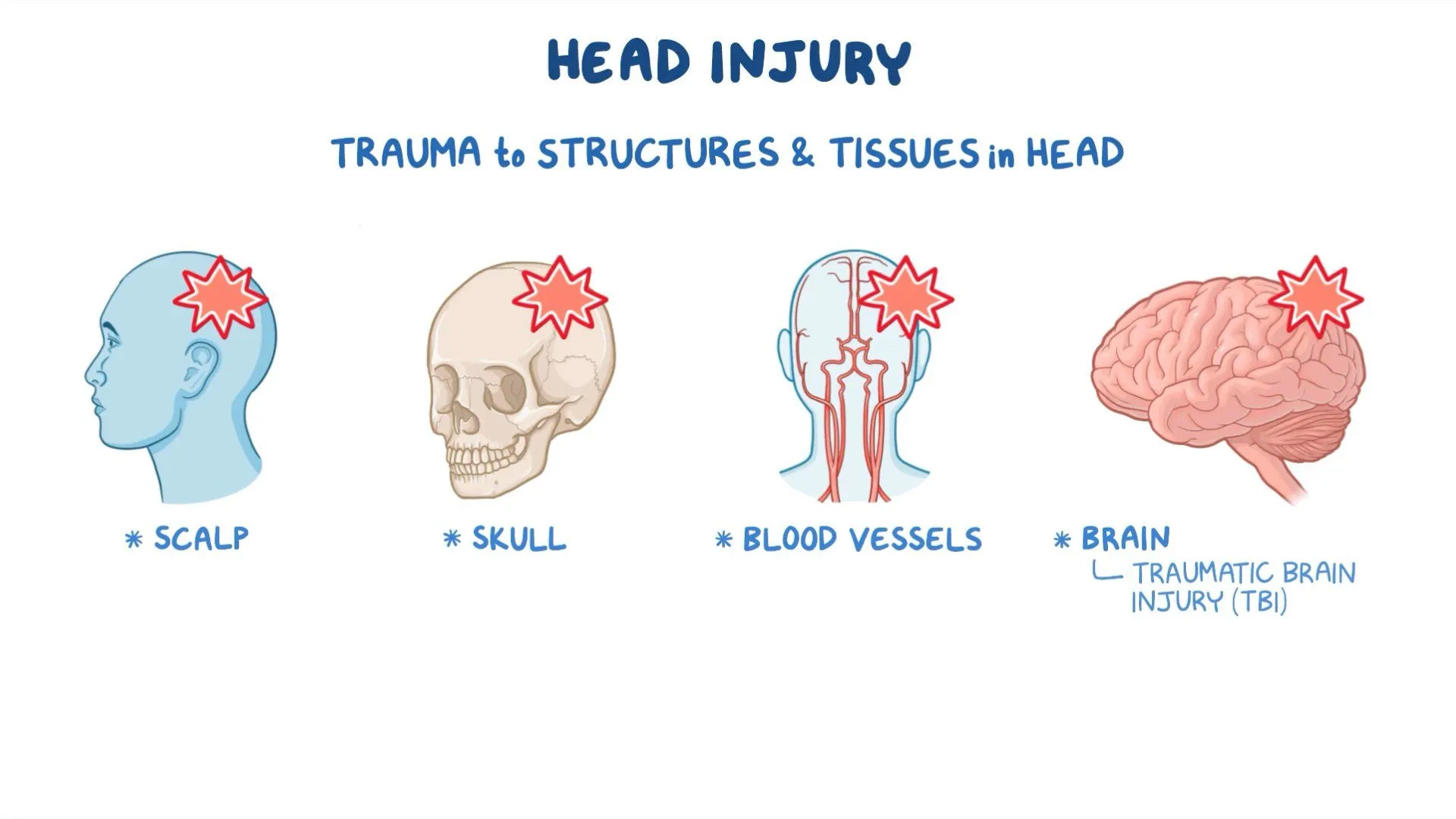
A head injury is any injury to the scalp, skull, or brain caused by an external force, such as a fall, road accident, sports injury, or blow to the head.
Dr. Sanjeev Srivastava is a specialist in neurosurgery who manages complex neurotrauma and head injury conditions. His clinical expertise encompasses the emergency assessment, surgical intervention, and intensive post-operative care required for acute traumatic brain injuries (TBI) and severe cranial trauma.
Core Head Injury Conditions Treated
Epidural Hematoma (EDH): Accumulation of blood between the skull and dura mater, often secondary to middle meningeal artery tears from skull fractures, requiring rapid surgical evacuation to prevent brain herniation.
Subdural Hematoma (SDH): Venous bleeding between the dura and arachnoid membranes caused by ruptured bridging veins during high-impact acceleration-deceleration trauma.
Intracerebral Contusions & Hemorrhages: Direct parenchymal bruising and localized tissue destruction causing cerebral edema, mass effect, and elevated intracranial pressure (ICP).
Skull Fractures: Management of linear, depressed, or basilar skull fractures that risk tearing the dura, causing cerebrospinal fluid (CSF) leaks, or impinging on underlying brain tissue.
Refractory Intracranial Hypertension: Severe elevation in brain pressure following traumatic injury that requires advanced invasive monitoring and aggressive medical/surgical control.
Surgical Interventions & Management Strategies
| Condition / Scenario | Surgical Approach | Primary Objective |
| Acute Mass-Effect Hematoma (EDH/SDH) | Emergent Craniotomy / Evacuation | Direct removal of blood clots to relieve focal brain compression. |
| Malignant Brain Swelling | Decompressive Craniectomy | Temporary removal of a large bone flap to allow expanding brain tissue room to swell without herniation. |
| Depressed Skull Fracture | Fracture Elevation & Reconstruction | Surgical lifting and alignment of bone fragments to protect brain parenchym. |
| Severe TBI with Intracranial Hypertension | External Ventricular Drain (EVD) / ICP Monitor | Real-time pressure tracking and therapeutic CSF drainage to preserve cerebral perfusion. |
Neurotrauma Clinical Management Workflow
Emergency Triage & Primary Stabilization
Implementation of ATLS guidelines, securing the airway, stabilizing cervical spine, and assessing Glasgow Coma Scale (GCS)
↓
Emergent Diagnostic Neuroimaging
Immediate non-contrast CT scan of the brain to identify mass-effect hematomas, midline shift, or skull fractures
↓
Targeted Surgical vs. Intensive Medical Intervention
Emergency craniotomy/craniectomy for hematoma evacuation or insertion of an EVD for elevated ICP control
↓
Neuro-Intensive Care Unit (Neuro-ICU) Optimization
Continuous cerebral perfusion pressure (CPP) management, seizure prophylaxis, and secondary brain injury prevention